- Allerton Health Centre, Belldean Road, Bradford, BD15 7WA
- enquiries@myskyn.co.uk
Call Now 01274 921 121

Consultations led by Dr Uzma Qureshi, MBChB, MRCGP, MRCS
Sagging skin is one of the most common reasons people feel they no longer look like themselves. It might start as a slight softening along the jawline, a neck that looks less smooth, or skin on the arms or stomach that feels looser than it used to. For some the change is gradual. For others, it appears more suddenly after weight loss.
What matters most is understanding the cause before choosing a treatment. At MySkyn Clinic, every plan starts with a detailed medical assessment by Dr Uzma Qureshi, who identifies what is actually driving the change in your skin before making any recommendation.
Sagging skin, also called skin laxity or loose skin, happens when the skin loses its natural firmness, bounce and support. Your skin stays firm thanks to two key proteins: collagen, which gives skin its strength and structure, and elastin, which allows it to stretch and return to shape. When these decline, or when the tissues beneath the skin change, the skin can no longer hold its shape as well as it once did.
Sagging skin is not a medical condition in itself, but it can have a real effect on how comfortable and confident you feel in your appearance.
Sagging skin can affect anyone, but it is most commonly noticed by people who are:
If you are unsure whether your concern is true skin laxity, volume loss or a skin quality change, that is exactly what your consultation is for.
Sagging skin can develop on the face and body, and the right treatment approach depends on where it appears.
Face and cheeks. As facial fat pads thin and shift with age, the cheeks can flatten and sit lower, deepening the folds between the nose and mouth.
Jawline and jowls. A crisp jawline is often one of the first features to soften. Loose tissue along the lower face can settle below the jaw, forming jowls.
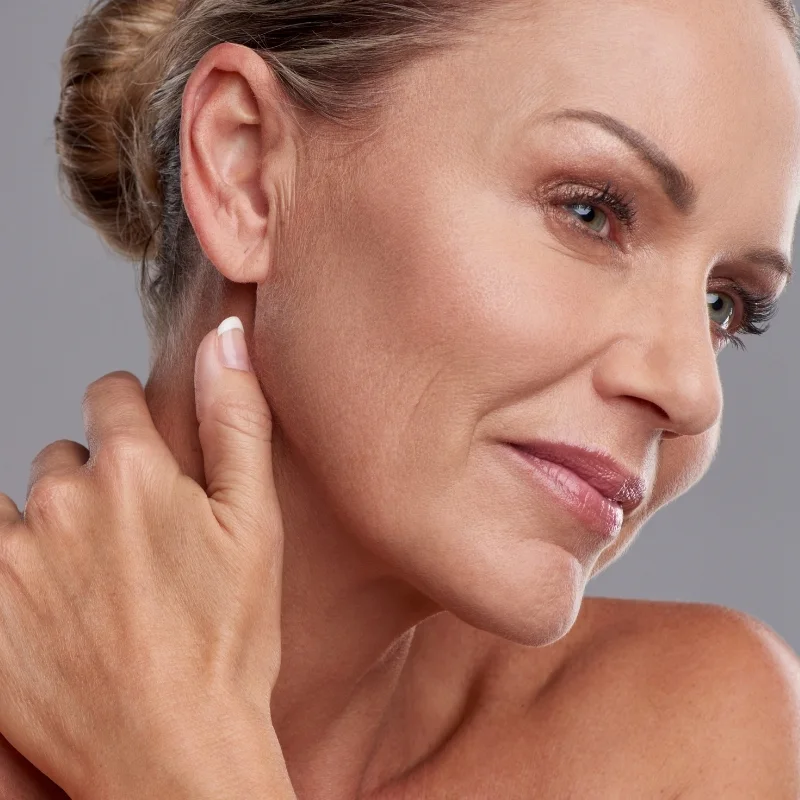
Neck and décolletage. The skin here is naturally thinner and often sun-exposed. It tends to become crepey and lined, sometimes before much changes on the face itself.
Upper arms, abdomen and thighs. These areas are particularly affected by weight loss. Loose skin here can be harder to treat non-surgically if the amount of excess skin is significant.
Knees and hands. Both commonly develop crepey, thinner skin with age or after weight loss.
You may notice:
Sagging skin rarely has one single cause. Common contributing factors include:
Natural ageing. From the mid-twenties onwards, collagen and elastin production gradually declines. The fat pads and bone structure that support the face also change over time, leaving skin with less to rest on.
Weight loss. When body volume reduces faster than skin can adapt, the skin may not fully retract. This is particularly common after significant or rapid weight loss, including that associated with GLP-1 medications.
Sun exposure. UV light accelerates the breakdown of collagen and elastin, leading to earlier sagging, thinning and rougher texture.
Hormonal changes. Falling oestrogen levels during the menopause can cause a noticeable drop in collagen and skin firmness.
Genetics, lifestyle and other factors. Smoking, poor nutrition, dehydration, stress, pregnancy and genetics all contribute to how and when skin laxity develops.
This distinction matters. Treating the wrong problem is one of the main reasons people feel disappointed with their results, so getting the diagnosis right comes first.
Skin laxity means the skin itself has lost firmness and elasticity. Collagen-stimulating treatments that remodel the deeper layers of skin are usually the focus.
Volume loss means the structure beneath the skin has reduced. This is especially common in the face, where loss of fat or bone density causes the cheeks to flatten and skin to drop. Tightening alone cannot restore lost structure.
Texture and skin quality change includes crepiness, roughness, fine lines, stretch marks and uneven tone. These respond best to resurfacing and hydrating treatments.
Most people have a mix of all three. This is why two people describing the same concern may need quite different treatment plans. Dr Uzma’s assessment identifies which concern is leading so your plan targets what will make the most visible difference.
You do not need to have the answers before you come in. At your consultation, Dr Uzma will talk through your concerns, review your medical history, and examine the area carefully. She will identify whether the main issue is laxity, volume loss, skin quality change or a combination, and explain what is realistically achievable for your skin. You will leave with a clear, personalised plan covering treatment options, number of sessions, recovery and costs. There is never any pressure to proceed.
The right treatment depends on the type of change and the area affected. These are the approaches we most often recommend, and many patients benefit from more than one.
Morpheus8 is usually the best fit when the main issue is mild to moderate skin laxity. It can help tighten and remodel the skin on the face, neck and body, especially when firmness has reduced over time. Discover Morpheus8
Skin boosters such as Profhilo, BabyGLOW, Hydro Deluxe and Polynucleotides are often most helpful when the skin feels thin, crepey or dehydrated rather than heavily sagged. They improve skin quality and hydration without adding volume or changing your features. Discover Skin Boosters
LaserMe fractional laser resurfacing is most useful when sagging skin is accompanied by surface changes such as sun damage, rough texture, pigmentation or acne scarring. It is more about improving skin quality, with some firming benefit. Discover LaserMe
Radiesse can be a good option when the skin needs more support as well as collagen stimulation. It is often used in areas such as the cheeks, jawline, hands and décolletage, where structure and firmness have both started to change. Discover Radiesse
Dermal fillers may be the better choice when the skin looks saggy mainly because of volume loss. This is especially common in the cheeks, temples, tear troughs, jawline and chin, where restoring support can create a fresher, more lifted appearance. Discover Dermal Fillers
If your skin changes followed significant weight loss, our dedicated Skin Tightening After Weight Loss page explains how we approach treatment for the face and body in that specific context.
Non-surgical treatments can make a meaningful difference to mild and moderate sagging skin, but they cannot remove large amounts of excess skin. Surgery may be the better route if there are significant overhanging folds, if loose skin is causing persistent irritation, or if facial sagging is advanced enough that non-surgical results would be limited.
If this applies to you, Dr Uzma will say so clearly. Where a surgical opinion is the right next step, we can discuss your options through MySkyn Surgical, so you can make a fully informed decision.
Doctor-led assessment. Every treatment plan is overseen by Dr Uzma, with a focus on safe, evidence-based care and natural-looking results.
Treatment matched to the cause. Sagging skin can be linked to laxity, volume loss, dehydration or skin quality changes. We assess what is driving the concern before recommending treatment.
Options for face and body. Sagging skin can affect the cheeks, jawline, neck, arms, abdomen and thighs, so treatment is tailored to the area involved.
Honest guidance. We explain which non-surgical treatments may help, where combination treatment may work best, and when results may be limited without surgery.
Personalised treatment planning. Some patients need tightening and collagen stimulation, while others benefit more from hydration, resurfacing or injectable support.
Natural-looking improvement. Our aim is always to improve skin quality and firmness in a way that looks balanced, subtle and in keeping with your features.
Sagging skin is a natural part of life, but you do not have to simply accept it. With the right diagnosis and a plan built around your skin, it is possible to look and feel more like yourself again.
Book a doctor-led consultation with Dr Uzma Qureshi at MySkyn Clinic for an honest assessment, a clear plan and expert care from start to finish.
